

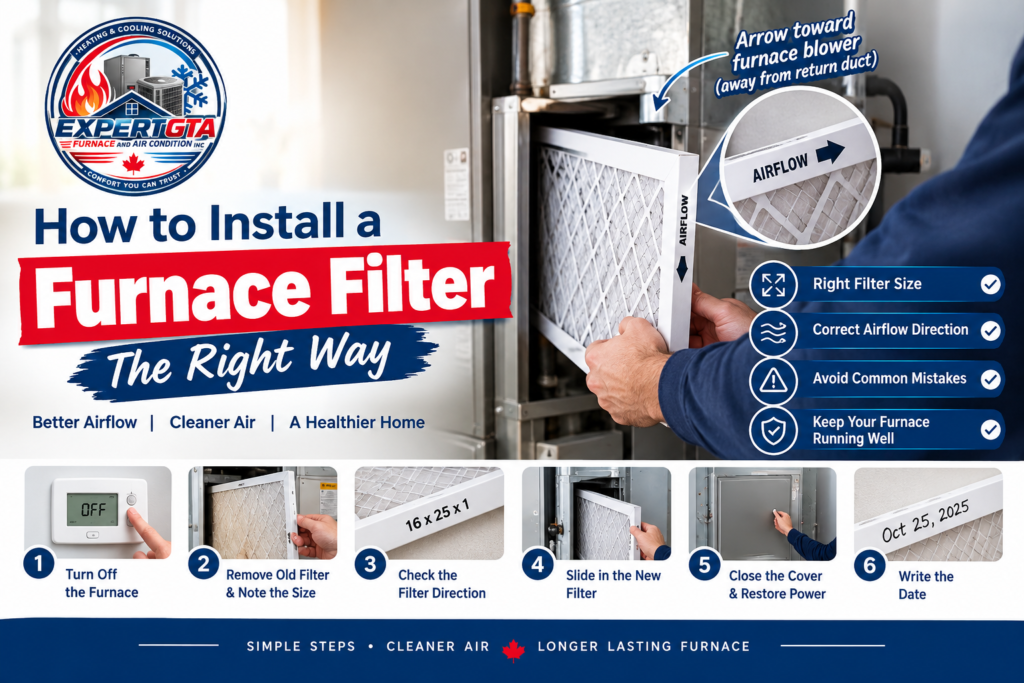
To install a furnace filter, turn off the furnace, slide out the old filter, and note which way its arrow points. Insert the new filter of the same size with its airflow arrow pointing toward the furnace blower, away from the return duct. Close the cover, restore power, and write the date on the frame. The job takes about five minutes and needs no tools in most homes.
This guide covers where the filter lives, how to choose the right one, how to get the direction right, and the mistakes that cause problems.
Before You Start: What You Need
- A replacement filter in the correct size
- A flashlight, if the furnace is in a dark basement or closet
- A marker for writing the date on the frame
- Gloves and a dust mask, if you are sensitive to dust
Step 1: Find the Furnace Filter Slot
The filter location depends on how your system was installed. Check these spots:
- Inside the furnace cabinet: A slot or door on the side or bottom of the unit, near the blower compartment.
- In the return air duct: A slot in the large duct that feeds air back to the furnace.
- Behind a return air grille: A large wall, ceiling, or floor vent that opens on a hinge or clips.
If you can’t find it, check your furnace manual or look for a thin rectangular slot between the return duct and the furnace.
Step 2: Turn Off the Furnace
Switch off the thermostat, or turn off the furnace’s power switch, before opening any panel. This stops the blower from pulling dust into the system while the filter is out. Some furnaces also have a door safety switch that shuts the unit off when the cabinet is opened.
Step 3: Remove the Old Filter and Note the Size
Slide the old filter out slowly to avoid spilling dust. Two details matter:
- Size: Printed on the cardboard frame, usually as length × width × thickness (for example, 16 × 25 × 1). Use the exact size listed. If the printed size is faded, measure the slot or the old filter. Nominal sizes on the frame can differ slightly from actual measurements, so match the number printed on the frame.
- Arrow direction: Note which way the airflow arrow points before you remove it, as a reference for the new one.
Step 4: Check the Filter Direction (Airflow Arrow)
This is where most people go wrong. Filters are built to be installed one way. The arrow printed on the frame shows the direction of airflow.
The arrow should point toward the furnace blower and away from the return duct. Air travels from the return ducts into the furnace, so the arrow should follow that path.
| Filter location | Arrow should point |
| In the furnace cabinet, beside the blower | Toward the blower, into the furnace |
| In the return air duct | Toward the furnace, away from the room |
| Behind a return air grille | Into the wall or duct, toward the furnace |
If you aren’t sure, trace the airflow. It goes from your rooms, through the return duct, into the furnace, and out through the supply vents.
Step 5: Slide the New Filter In
Hold the filter by the frame with the arrow facing the right way, and slide it into the slot. It should fit snugly without bending or forcing. Gaps around the edges let air bypass the filter, so dust and debris reach the blower and heat exchanger.
Close the cover or grille securely. A loose cover can cause air leaks or trigger the door safety switch.
Step 6: Turn the Furnace Back On
Restore power and set the thermostat. Listen for normal airflow. Write the installation date on the filter frame, or set a phone reminder, so you know when the next change is due.
How to Choose the Right Furnace Filter
Size comes first, but a few other details matter.
Filter Thickness
Common thicknesses are 1 inch, 2 inches, 4 inches, and 5 inches. Match what your system was designed for. Don’t put a thin filter into a thick slot or the reverse, since this leaves gaps or blocks proper seating.
MERV Rating
The MERV rating shows how well a filter captures particles. A higher number means finer filtration, but it can also mean more airflow resistance. Many standard homes do well with a mid-range filter. Check your furnace manual before switching to a high-MERV filter. If the manufacturer doesn’t recommend it, a very dense filter can strain the blower.
Filter Types
- Fiberglass (disposable): Basic protection for the furnace, with limited capture of fine particles.
- Pleated: Better at capturing dust, pollen, and pet dander.
- Washable/reusable: Needs regular cleaning and must be fully dry before reinstalling.
- Electrostatic: Uses a static charge to attract particles.
How Often to Change a Furnace Filter
Most 1-inch filters are typically changed every one to three months, and thicker filters often last longer. Your schedule depends on:
- Whether you have pets that shed
- Allergy sensitivities in the household
- Construction or renovation dust
- How many hours the furnace runs each day
- The filter type and manufacturer’s guidance
During the heating season, when the furnace runs more often, check the filter monthly. If it looks gray and clogged, change it, whatever the calendar says.
Common Mistakes When Installing a Furnace Filter
- Installing it backwards. The arrow should point toward the furnace.
- Using the wrong size. A filter that is too small lets air bypass it.
- Forcing a filter that doesn’t fit. This can bend the frame and create gaps.
- Running the furnace with no filter. Dust goes straight into the blower and heat exchanger.
- Stacking two filters. This can restrict airflow.
- Skipping the reminder. A forgotten filter gets clogged, and a clogged filter makes the furnace work harder.
When to Call a Furnace Technician
Call a professional if:
- You can’t find the filter slot or aren’t sure it’s accessible
- The filter slot is damaged or the door doesn’t close properly
- The furnace short-cycles, shuts off, or blows weak air even with a clean filter
- You notice unusual noises, burning smells, or repeated shutdowns
- You want advice on upgrading filtration or adding an air purifier or media filter
A qualified furnace technician can inspect the blower, check airflow, and confirm the system is running safely. If you notice a gas smell, leave the home and contact your gas utility or emergency services right away. Don’t try to fix it yourself.
What Happens If You Don’t Change or Install It Properly?
A dirty or backwards filter restricts airflow. That can mean weaker heat from the vents, longer run times, and extra strain on the blower motor. In some systems, restricted airflow can cause the furnace to overheat and shut off on its limit switch. Dust buildup can also affect indoor air quality.
Furnace Filter Care for Toronto Homes
Toronto’s long heating season means the furnace may run for many months, so filters can load up with dust faster than in milder climates. Checking the filter monthly through the cold months is a simple habit. If your furnace is due for service, or you want a professional to confirm the filter setup, see our HVAC services in Toronto or learn more about furnace repair in Toronto.
FAQs
Which way does the arrow go on a furnace filter?
The arrow points toward the furnace blower, in the direction air flows into the furnace. It points away from the return duct or grille.
How do you put a filter in a furnace?
Turn the furnace off, open the filter slot, remove the old filter, and slide in the new one with the arrow pointing toward the furnace. Close the cover and turn the system back on.
Can I install a furnace filter backwards?
It will physically fit, but it won’t work as designed. A backwards filter may let particles through and strain the filter media. Reinstall it with the arrow pointing the right way.
How do I know what size furnace filter I need?
Check the size printed on the frame of your current filter. If it’s unreadable, measure the slot or filter length, width, and thickness, and match those numbers.
Do I need to turn off the furnace to change the filter?
Yes. Turning it off before you open the filter compartment is the safest approach and keeps dust from being pulled into the system.
Can I run my furnace without a filter?
No. Running without a filter lets dust and debris reach the blower and heat exchanger, which can cause problems over time.
Need Help With Your Furnace?
If you’ve changed the filter and your furnace still isn’t heating well, or you’d rather have an expert check the system, contact a licensed furnace technician for an inspection.