
Summary:
In this guide, you will learn the HVAC system cost for Canadian homeowners covering furnaces, central air conditioning, heat pumps and ductless mini-splits. It includes labor, equipment, home size, regional rates, replacement, and incentives from the government. You’ll also discover how to make the most of a contractor’s quotes, make your home more energy-efficient, and plan for more work. These hands-on tips can guide you in installing an HVAC system to meet your home, climate, comfort and budget requirements.
How Much Should You Budget for a New HVAC System?
If you have an old furnace, need an air conditioning system or want to replace the old furnace with a heat pump, you may find that your home is more comfortable, but it is not always clear what the costs are. Your budget can be influenced by a number of factors, such as equipment costs, labour, ductwork, electrical modifications and permits. Knowing the HVAC installation cost in advance will enable you to make an informed choice when hiring someone to install your system, you’ll know how to compare prices and you will be able to make sure you won’t have any unexpected charges. This guide provides information on the usual costs in Toronto, factors affecting the cost, options for replacement and tips for saving.
How Much Does HVAC Installation Cost in Toronto?
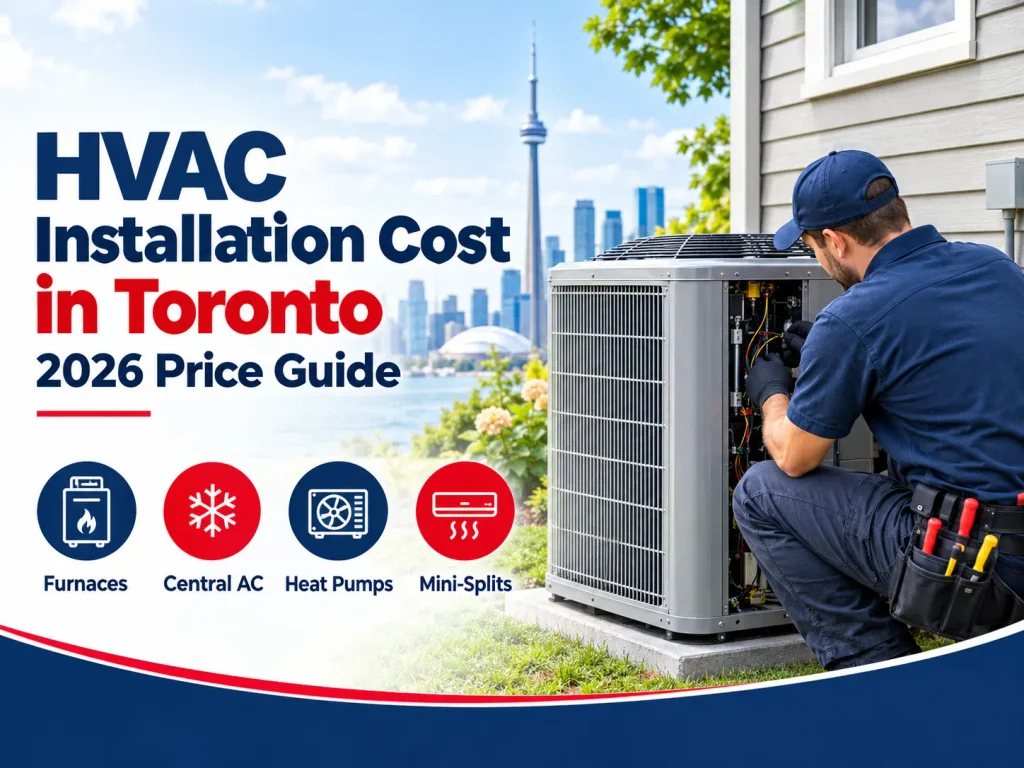
The cost of the hvac installation will differ according to the type of HVAC system, the size of your home and the installation needs. HomeStars 2026 Pricing Guide gives an estimate for residential HVAC installations that range from $3,500 to $12,500 and for complete systems, installation with new ductwork can be even more expensive.
Average HVAC Installation Cost for a Home
The following estimates are for your reference when making a budget. All prices are subject to change and depend on the equipment, location, contractor and scope of the project.
| HVAC system | Typical installed cost (CAD) |
| Gas furnace | 3,500–8,000 |
| Central air conditioner | 3,000–8,500 |
| Furnace and central AC combination | 6,500–15,000 |
| Ducted air-source heat pump | 4,500–12,000 |
| Single-zone ductless mini-split | 2,000–7,000 |
| Complete system with new ductwork | 10,000–20,000+ |
These are broad planning ranges, not guaranteed quotes. Equipment specifications and installation conditions can change the final price.
What Is Included in an HVAC Installation Quote?
A typical quote may include the HVAC unit, installation labour, standard materials, system connections, startup testing, and removal of old equipment. Some contractors include permits and disposal, while others list them separately.
Before accepting an estimate, check whether it covers thermostat installation, duct modifications, electrical work, gas connections, drainage, inspections, and taxes. A detailed quote makes it easier to compare the cost of hvac system installation between contractors.
HVAC Installation Cost by System Type:
All houses are different and may require different heating and cooling systems. Compare installation costs and performance/operating requirements.
Central Air Conditioning Installation Cost:
The average installation price for central AC units is 3,000-8,500 installed, depending on the size, efficiency and ductwork. Ducts that are compatible with the home will generally not need as much modification as a home where the central cooling unit is new to the property.
Furnace Installation Cost:
New gas furnace costs between 3500 & 8000 when installed. Although they can be more expensive, they are more efficient when they are designed and installed correctly and can save gas.
Heat Pump Installation Cost:
Cost of a heat pump is about 4500-12000 for a ducted installation with appropriate existing ductwork. It can give both heating and cooling, but its efficiency will vary based on the model, climate, electricity costs and back-up heating needs.
Ductless Mini-Split Installation Cost:
The price of ductless hvac is dependent on the number of indoor units, system size and the complexity of the installation. One zone mini split is suitable for an addition or an unvented room; a multi zone mini split can be installed in multiple rooms. They may not need to install a full duct system, but do need electrical upgrades.
Complete HVAC System Replacement Cost:
The replacement of a furnace and air conditioner will cost around 6,500–15,000. The cost to replace hvac system increases when the project requires new ductwork, electrical service changes, ventilation improvements, or structural modifications.
What Factors Affect HVAC Installation Costs?
The actual hvac installation cost will depend on a number of factors other than the advertised price of the equipment.
Home Size and Heating or Cooling Requirements:
Homes that are bigger and have more rooms tend to need more heating and cooling. But size of the system is not just based on the floor area. Other factors that influence the heating and cooling loads are insulation, windows, ceiling height, air leakage, and room layout.
HVAC System Size and Energy Efficiency:
An appropriately sized system maintains stable temperatures and is effective. Equipment that is too large can cycle more often than needed, and equipment that is too small can be difficult to run in the extreme weather. Some are more efficient, and may have a higher upfront cost, but could save energy costs over time.
Labour and Installation Complexity:
Installation time, equipment access, removal requirements and connections for the new system are all taken into account by engineers and contractors. Labour costs may be different for difficult attic, basement or roof-top installations.
Existing Ductwork and Ventilation:
Leaky, broken or poorly designed ducts could lead to decreased performance. This may involve additional costs for the repairs, sealing, balancing or replacement of the project.
Electrical, Gas Line, and Drainage Modifications:
Dedicated electrical circuits, appropriate wiring, condensate drainage or other modifications might be necessary for a new heat pump or air conditioner. Before starting, an electrician might have to inspect the house power panel and the available power. In the event the panel can’t take the additional load, an electrical upgrade may cost more for the project.
Permits, Inspections, and Additional Materials:
Municipalities have different permit needs and fees. Get clarification from your contractor about the following approvals and if they are covered in the estimate.
How Much Does HVAC Installation Labour Cost?
Labour requirements are dependent on the system type, installation time, technician requirements, and site conditions. Simple replacements are typically less complicated than installations for new ductwork or significant electrical modifications.
When you’re considering estimates from an HVAC contractor, look to see if it includes follow-up services, disposal, and commissioning along with labour. The total may increase with emergency scheduling, difficult access and other trades.
How Can You Reduce HVAC Installation Costs?
The cost of the hvac installation cost can be handled without sacrificing comfort and safety.
- Get detailed quotes: Get a minimum of three quotes with the same versions of equipment and definite exclusions.
- Select the proper size of the system: Do not buy the biggest system without getting a heating/cooling load assessment.
- Research incentives: Before entering into a contract, see what current federal, provincial, municipal and utility incentives are available. The Toronto Greener Homes Grant has been closed to new applications, so check if you qualify, rather than assuming you can.
- Plan: Be ready to have flexibility in your schedule in exchange for booking out of peak demand, but savings are not guaranteed.
Is a High-Efficiency HVAC System Worth the Cost?
A high-efficiency system may reduce energy consumption, but the savings depend on equipment performance, usage patterns, utility rates, and installation quality. Compare the additional upfront price with realistic annual savings rather than assuming the most expensive model is automatically the best choice.
The Canadian climate also matters. A cold-climate heat pump may suit some homes, while others may benefit from a furnace or a dual-fuel arrangement. Follow the manufacturer’s maintenance recommendations to protect performance and extend equipment life.
Frequently Asked Questions:
What Is the Average Cost of a New HVAC System?
A common residential installation can range from approximately $3,500 to $12,500, depending on the system and installation scope. Complete systems or projects requiring new ductwork can cost more.
How Much Does It Cost to Install HVAC in a 2,000-Square-Foot House?
The price depends on insulation, layout, climate, equipment choice, and existing ductwork. Request a load calculation and an itemized quote to estimate the cost to install hvac system for your particular home.
How Long Does HVAC Installation Take?
A straightforward equipment replacement may take one day. Complex installations involving ductwork, electrical changes, or multiple systems may take several days or longer.
Is It Cheaper to Replace HVAC Components Together?
Replacing compatible components together may reduce duplicated labour and help ensure system compatibility. However, replacing a working component is not always the most economical choice.
Are HVAC Installation Costs Eligible for Government Rebates?
Some eligible installations may qualify for available incentives, depending on location, household circumstances, equipment, and program rules. Check current program terms before starting work.
How Much Should I Budget for Unexpected Installation Expenses?
Keep a contingency based on the contractor’s assessment and the age of existing infrastructure. Potential extras include duct repairs, wiring changes, drainage work, and permit fees.
Final Thoughts:
Planning your installation starts with understanding your home’s requirements, comparing suitable systems, and reviewing detailed quotes. The HVAC installation cost is only one part of the decision; long-term energy use, reliability, comfort, and maintenance also matter. Choose properly sized equipment and a qualified installer who explains the work clearly. A careful assessment helps you budget realistically and select a heating and cooling solution that suits your home for years to come.