


Choosing between a heat pump and a furnace depends on your home’s heating needs, winter temperatures, energy prices, and installation budget. This guide explains how both systems work, compares energy efficiency, installation and maintenance costs, and explores cold-weather performance in Canada. It also covers hybrid heating systems, potential rebates, and practical selection tips to help homeowners compare their options and make an informed heating decision.
Heat Pump vs Furnace: What Canadian Homeowners Need to Know
Choosing a heating system becomes important when your furnace starts breaking down, your winter energy bills keep rising, or your home struggles to stay warm during cold Canadian weather. The heat pump vs furnace decision depends on more than the equipment price. You also need to consider electricity and natural gas rates, installation requirements, winter performance, and long-term maintenance. This guide explains how each system works, compares costs and efficiency, and helps Canadian homeowners choose a heating solution that fits their home and budget.
What Is the Difference Between a Heat Pump and a Furnace?
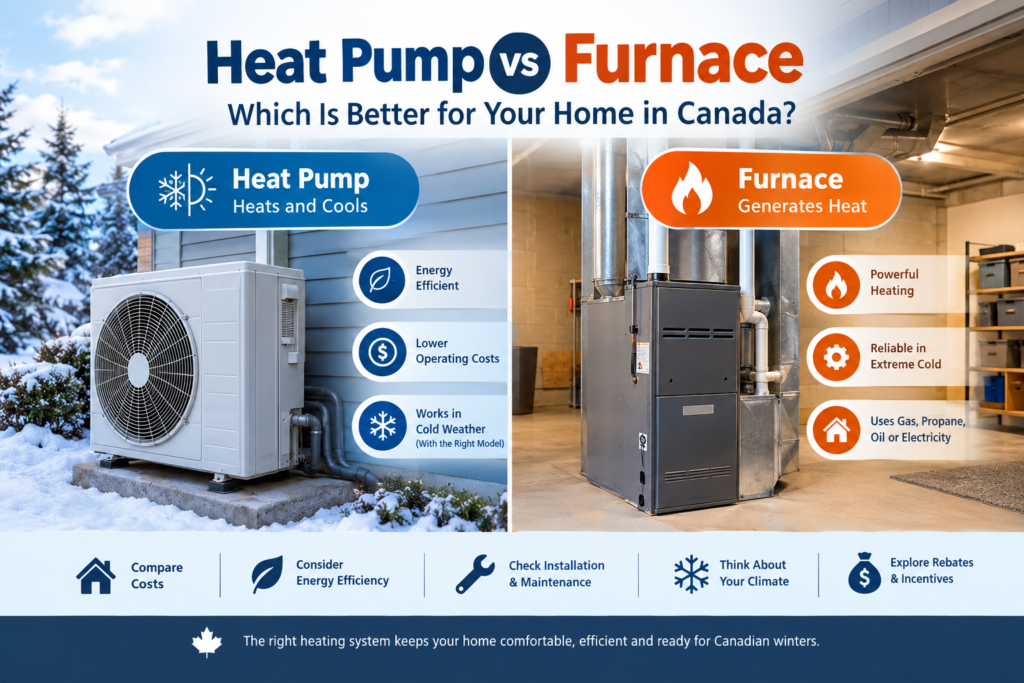
A heat pump transfers heat between the outdoors and your home, while a furnace generates heat using natural gas, propane, oil, or electricity. Compassionate this difference helps you decide which system offers the right balance of comfort and operating costs.
How Does a Heat Pump Work?
A heat pump uses electricity to move heat rather than generate it directly. In winter, an air-source heat pump extracts available heat from outdoor air and transfers it indoors. In summer, it reverses the process to cool your home.
This makes a heat pump useful for year-round temperature control. Natural Resources Canada explains that heat pumps can deliver more thermal energy than the electrical energy they consume, although efficiency varies with outdoor temperatures and equipment design.
How Does a Furnace Work?
A furnace produces warm air and distributes it through your home’s ductwork. A gas furnace burns natural gas, while an electric furnace uses resistance heating elements.
The choice between an electric furnace and heat pump matters because both use electricity differently. An electric furnace converts electricity into heat, whereas a heat pump moves existing heat. A gas furnace may have lower running costs where natural gas is inexpensive, depending on local utility rates.
Heat Pump vs Furnace: Key Differences at a Glance
| Feature | Heat pump | Furnace |
| Main function | Heating and cooling | Heating |
| Energy source | Electricity | Gas, propane, oil, or electricity |
| Energy efficiency | Often highly efficient | Depends on fuel and efficiency rating |
| Winter performance | Depends on model and outdoor temperature | Gas models maintain strong heating output in cold weather |
| Cooling | Can provide air conditioning | Requires a separate AC system |
| Installation | May require indoor and outdoor equipment | Often connects to existing ductwork |
| Maintenance | Filters, coils, outdoor unit, and refrigerant system | Filters, burners or heating elements, and safety checks |
The heat pumps vs furnace comparison also depends on whether your home already has central ductwork. A ducted heat pump may use existing ducts, but airflow and equipment compatibility need professional assessment. Ductless systems can suit homes without suitable ductwork.
Heating Performance and Comfort:
A furnace can deliver warm air quickly, while a heat pump often runs for longer periods to maintain a steady indoor temperature. Both can provide comfortable heating when correctly sized and installed.
Energy Efficiency:
A modern heat pump can provide several units of heat for each unit of electricity used under suitable conditions. By comparison, a gas furnace’s efficiency depends on how effectively it converts fuel into useful heat.
Installation Requirements, Lifespan, and Maintenance
A heat pump usually needs an outdoor unit and indoor equipment. A furnace replacement may be simpler if your existing setup is compatible. Actual lifespan depends on equipment quality, usage, installation, and maintenance.
Heat Pump vs Furnace: Which Is More Energy Efficient?
For many Canadian homes, a heat pump uses less energy than an electric resistance furnace. It can also outperform a gas furnace in energy efficiency, but lower energy use does not automatically mean lower bills.
Heat Pump Efficiency in Cold Weather:
Cold-climate heat pumps are designed to operate in low outdoor temperatures. Some models can provide heating at temperatures approaching -30°C, although output and efficiency vary. Backup heating may still be needed during severe cold or when the system cannot meet the home’s heating demand.
Gas Furnace Efficiency Ratings:
When comparing a gas furnace vs heat pump, check the furnace’s annual fuel utilization efficiency (AFUE) rating and the heat pump’s seasonal performance ratings. These measures describe different aspects of performance, so compare the systems using expected seasonal energy consumption and local utility prices.
How Climate Affects Heating Efficiency
A heat pump generally works more efficiently during milder weather. As outdoor temperatures fall, its efficiency and heating capacity may decrease. A furnace can provide a dependable alternative during extreme cold, especially in a properly designed hybrid system.
Heat Pump vs Furnace: Which Costs Less?
There is no single installation price or monthly bill that applies to every Canadian home. Costs depend on equipment size, installation complexity, existing ductwork, electrical capacity, and local labour rates.
Heat Pump Installation Costs:
Heat pump installation may cost more upfront when the project requires new electrical circuits, ductwork modifications, or additional indoor equipment. However, homeowners replacing an existing air conditioner may have a simpler installation if the system is compatible.
Gas and Electric Furnace Installation Costs:
A furnace replacement can be more straightforward when the home already has suitable ductwork and gas connections. An electric furnace vs heat pump comparison should include expected electricity consumption, not just the initial purchase price.
Monthly Heating Bills and Operating Costs:
To estimate costs, compare your home’s annual heating demand, the system’s seasonal efficiency, and your electricity and gas rates. A heat pump vs gas furnace analysis should also account for gas connection charges if you retain natural gas service.
Maintenance and Long-Term Repair Costs:
Both systems require regular maintenance. Heat pumps may need refrigerant-system repairs, while furnaces can require blower, ignition, burner, or heating-element repairs. A realistic budget includes maintenance, future repairs, and eventual replacement.
Rebates and Incentives for Canadian Homeowners:
Federal, provincial, territorial, and municipal programs may help eligible homeowners with installation costs. Availability, eligibility, and funding change over time, so confirm current requirements through Natural Resources Canada and your provincial energy program before relying on a rebate.
Heat Pump vs Furnace in Cold Canadian Winters:
Can a heat pump keep your home warm below freezing? Yes, if it is designed for your climate and sized correctly. However, some homes need supplemental heating during the coldest periods.
A gas furnace can maintain heating output during extreme cold without relying on outdoor heat extraction. For homeowners researching heat pump vs furnace ontario and Toronto, the right choice depends on the home’s insulation, local weather, energy rates, and the selected equipment.
In colder areas, including North Bay, a qualified HVAC professional should assess the home’s heating load before recommending equipment or arranging furnace installation North York.
Heat Pump vs Furnace: Pros and Cons
Our experts discuss the heat pump vs furnace pros and cons here, stay tuned with us!
Advantages of a Heat Pump:
- Provides heating and cooling in one system.
- Can reduce energy consumption compared with electric resistance heating.
- Can lower emissions depending on the electricity supply and displaced heating fuel.
Disadvantages of a Heat Pump:
- Upfront costs can be higher.
- Heating capacity and efficiency vary in extreme cold.
- Poor sizing or installation can reduce performance.
Advantages of a Furnace:
- Gas furnaces can provide dependable heat in very cold weather.
- Existing ductwork and gas connections may simplify replacement.
- Homeowners familiar with central furnace heating may find replacement easier to plan.
Disadvantages of a Furnace:
- A furnace alone does not provide air conditioning.
- Gas models depend on fuel availability and combustion equipment.
- Electric resistance furnaces can use considerably more electricity than heat pumps.
Which System Is Better for Your Home?
The best choice depends on your current equipment, budget, climate, and future plans.
- Existing homes: Consider a heat pump if you want efficient heating and cooling, but check insulation, ductwork, and electrical capacity.
- New construction: Compare heat pumps with other options during the design stage to select appropriately sized equipment.
- Homes with gas lines: A gas furnace may remain cost-effective where gas prices are low.
- Homes without natural gas: A heat pump can be an attractive option, particularly when compared with electric resistance heating.
If you are exploring an electric heat pump furnace combination, confirm that the equipment is compatible and that the backup system is sized for your home’s needs.
Can You Use a Heat Pump and Furnace Together?
Yes. A heat pump and gas furnace can operate as a dual-fuel or hybrid heating system. The heat pump handles heating when conditions and energy prices make it a suitable choice. The furnace takes over when outdoor temperatures fall, or the controls determine that gas heating is preferable.
This furnace and heat pump arrangement can balance efficiency and cold-weather performance. However, savings depend on equipment costs, energy prices, control settings, and how often the furnace operates.
Heat Pump vs Furnace: Maintenance and Lifespan
Heat pumps need clean filters, clear outdoor airflow, coil inspections, and periodic professional service. Furnaces also need clean filters and regular inspections of their heating components and safety controls.
Neither system has a guaranteed lifespan. Maintenance, operating conditions, installation quality, and repair history all affect how long equipment lasts.
How to Choose Between a Heat Pump and a Furnace
Before making a decision, consider these four steps:
- Assess your climate: Check how the proposed heat pump performs at your area’s winter design temperature.
- Compare total costs: Review installation quotes, utility rates, maintenance, and expected annual energy use.
- Check your home: Insulation, air leakage, ductwork, and electrical capacity affect system performance.
- Get professional advice: Ask a qualified HVAC contractor to calculate your home’s heating load and explain the equipment options.
If you are considering an Enercare heat pump or another provider’s system, compare the written quote, equipment model, warranty, installation scope, and ongoing service terms. Do not choose based on a brand name alone.
Frequently Asked Questions:
Is a Heat Pump Better Than a Furnace in Canada?
A heat pump can be a strong choice for efficient heating and cooling, but a furnace may suit homes with low natural gas costs or demanding winter heating needs.
Is It Cheaper to Run a Heat Pump or a Gas Furnace?
It depends on electricity and gas prices, equipment efficiency, climate, and the home’s heating demand. Compare annual operating costs rather than assuming one system is always cheaper.
Can a Heat Pump Replace a Furnace Completely?
Yes, a correctly sized cold-climate heat pump can serve as a home’s main heating system. Some homes still benefit from backup heating during extreme cold.
Do You Need a Furnace With a Heat Pump?
No. A furnace is not always necessary. However, a hybrid system can be useful where winter conditions or utility prices favour gas heating at certain times.
Which Heating System Lasts Longer?
Lifespan varies by model, maintenance, and operating conditions. Review manufacturer guidance and obtain a professional assessment before deciding whether to repair or replace existing equipment.
Is a Heat Pump Worth It if You Already Have a Furnace?
It may be, especially if you also need air conditioning or want to reduce energy consumption. Compare the cost of adding a heat pump with the expected savings and the condition of your existing furnace.
Final Verdict:
The heat pump vs furnace decision comes down to your home’s heating needs, energy prices, and budget. A heat pump can provide efficient year-round comfort, while a gas furnace offers dependable heating during severe winter weather. A hybrid system can combine both benefits.
Before replacing equipment, compare written installation quotes and ask an HVAC professional to assess your home’s insulation, heating load, and electrical requirements. This approach helps you choose a system based on your actual home rather than general claims about efficiency or savings.