
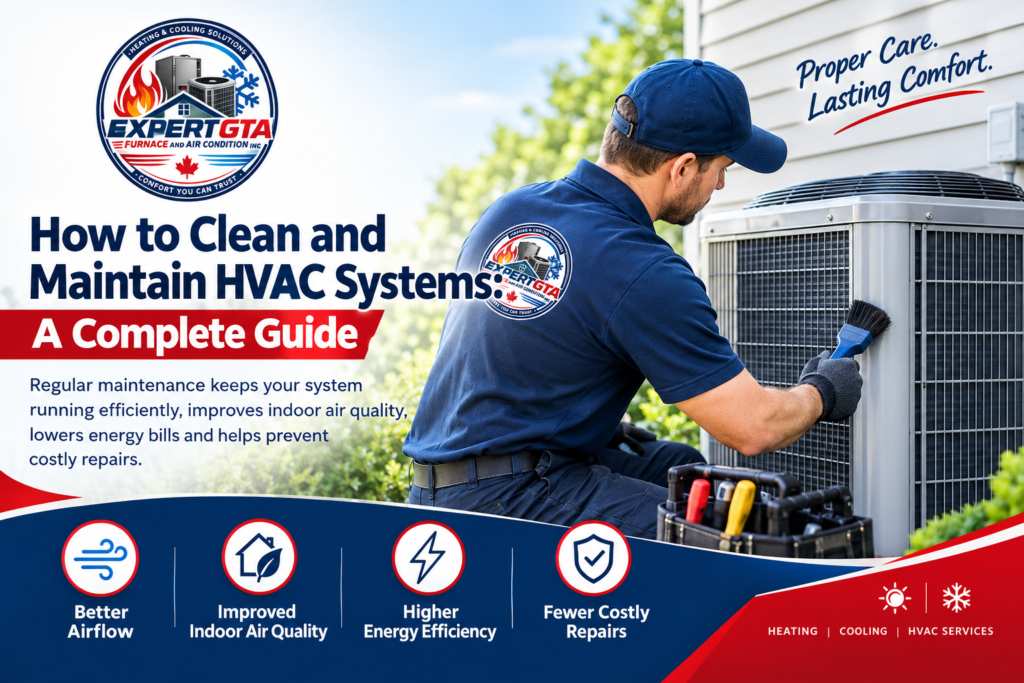
Regular HVAC care can make a noticeable difference in how comfortably your home heats and cools. Dusty filters, dirty coils, blocked vents, and clogged drains can restrict airflow and make the system work harder. Learning how to clean and maintain HVAC system Furnace replacements helps homeowners support better airflow, indoor comfort, energy efficiency, and equipment life. Routine care also helps identify small problems before they develop into expensive repairs.
Why Is HVAC Cleaning and Maintenance Important?
Good hvac maintenance is about more than keeping equipment clean. It combines routine cleaning with inspections that help an HVAC system operate safely and consistently. A well-maintained system can provide more reliable heating and cooling while helping homeowners spot developing issues.
Improves Airflow and HVAC Efficiency:
A dirty filter or blocked vent can restrict the amount of air moving through the system. When airflow drops, the HVAC equipment may need to run longer to reach the desired temperature. Replacing filters, cleaning accessible components, and keeping vents clear can support normal airflow and efficient operation.
Helps Maintain Indoor Air Quality:
HVAC equipment circulates air throughout your home. Dust, pet hair, and other particles can collect on filters and accessible components. Regular cleaning can help reduce the amount of accumulated debris that gets circulated through the living space.
Reduces Dust and Allergen Buildup:
A neglected HVAC system may collect dust and debris around filters, vents, coils, and other components. Routine cleaning does not remove every indoor pollutant, but it can help control visible dust and buildup.
Can Help Prevent Costly HVAC Repairs:
HVAC preventive maintenance gives technicians an opportunity to identify worn components, drainage problems, electrical concerns, or unusual system performance before they become larger problems. This is one of the key HVAC maintenance benefits for homeowners.
How Often Should You Clean and Maintain an HVAC System?
The right schedule depends on the HVAC system, filter type, operating conditions, pets, indoor dust levels, and manufacturer recommendations. A practical HVAC maintenance checklist can divide tasks into monthly, seasonal, and annual work.
Monthly HVAC Maintenance Tasks:
Check the air filter and replace or clean it when needed. Look at vents and registers for dust or blockage, and make sure furniture is not restricting airflow. You can also check the indoor and outdoor areas for unusual odors, sounds, or visible problems.
Seasonal HVAC Cleaning Tasks:
At the start of a cooling or heating season, inspect the outdoor unit and remove leaves, grass, and other debris around it. Check accessible vents, drains, and visible connections. Seasonal HVAC maintenance is especially useful before periods of heavy heating or cooling demand.
Annual Professional HVAC Maintenance:
Professional inspection is generally recommended at least once a year, although some systems and usage conditions may require more frequent service. Annual hvac servicing can include inspection, testing, cleaning, and adjustment of components that homeowners should not handle themselves.
How to Clean and Maintain HVAC Systems:
The following steps explain how to clean and maintain hvac systems while separating simple homeowner tasks from work that may require professional training.
Turn Off the HVAC System Safely:
Before cleaning, turn the system off using the thermostat. For tasks involving electrical components or deeper cleaning, shut off the appropriate power supply according to the manufacturer’s instructions. Never clean a powered system when there is a risk of contacting electrical components.
Replace or Clean the Air Filter:
Locate the filter and check its condition. Disposable filters should generally be replaced rather than washed. Reusable filters can be cleaned according to the manufacturer’s instructions. The correct replacement interval varies, so check the filter packaging and equipment manual.
Clean HVAC Vents and Registers:
Remove accessible vent covers and gently clean away dust and debris. A vacuum with a suitable attachment can help remove surface dust. Avoid pushing debris deeper into the ductwork.
Clean the Evaporator Coil:
The evaporator coil can collect dirt that reduces heat transfer and airflow. Light accessible cleaning may be possible on some systems, but deep coil cleaning is often better handled by a technician because the coil is located inside the HVAC equipment.
Clean the Condenser Coil:
The outdoor condenser coil can become covered with grass, leaves, and dirt. Remove loose debris from around the unit and keep sufficient clearance around it. Bent fins can be delicate, so avoid aggressive brushing or pressure that could damage them.
Check and Clean the Condensate Drain:
Air conditioning systems produce condensation that normally drains away through a condensate line. A blockage can cause water to back up. Check for visible signs of standing water or leakage and have persistent drainage problems professionally inspected.
Inspect the Blower and Fan:
The blower and fan move air through the HVAC system. Dust accumulation, unusual movement, or strange sounds can indicate a problem. Because these components can involve electrical and mechanical connections, deeper inspection should generally be left to a qualified technician.
Check Refrigerant Lines and Connections:
Look at accessible refrigerant lines for visible damage, corrosion, or unusual ice buildup. Do not open the refrigerant circuit. Low refrigerant is not a routine cleaning issue and should be diagnosed and handled by a qualified professional.
Inspect Ductwork for Dust and Leaks:
Check accessible ductwork for visible gaps, loose connections, or damage. Air leaks can reduce the amount of conditioned air reaching rooms. Extensive duct cleaning or repair should be based on actual system conditions rather than routine assumptions.
Test the Thermostat:
Check whether the thermostat responds correctly to heating and cooling settings. If the temperature reading seems inaccurate or the system does not respond properly, the thermostat or another component may require professional diagnosis.
How to Maintain an HVAC System Between Professional Visits:
Knowing how to maintain an HVAC system between professional visits can help homeowners stay ahead of simple problems. Keep the outdoor unit clear, avoid blocking indoor vents, and monitor changes in system performance.
Keep the Outdoor Unit Clear:
Remove leaves, grass, branches, and other debris around the outdoor condenser. Maintain reasonable clearance so air can move freely around the unit.
Keep Air Vents Unblocked:
Furniture, curtains, rugs, and other objects can restrict airflow. Keep supply and return vents accessible and avoid covering them.
Monitor Unusual Sounds or Odors:
Grinding, rattling, buzzing, burning smells, or persistent musty odours should not be ignored. Turn the system off if there is a serious electrical issue or a burning smell, and arrange professional inspection.
Check for Water Leaks:
Look around the indoor equipment for unexpected moisture or water. A leak can result from a blocked drain, frozen coil, condensate problem, or another issue.
Keep the Area Around the Indoor Unit Clean:
Avoid storing boxes, chemicals, or clutter directly around the indoor HVAC equipment. Keeping the area accessible makes routine inspection easier.
For homeowners who notice problems that extend beyond routine cleaning, related services such as Furnace Repair may be needed. If an older heating system has reached the end of its useful life, Furnace replacement may also be considered after a professional assessment.
What Parts of an HVAC System Should Be Cleaned Regularly?
| HVAC Component | What to Check/Clean | Suggested Frequency |
| Air filter | Replace or clean as applicable | Monthly to every few months |
| Vents and registers | Remove dust and debris | Monthly |
| Evaporator coil | Check for dirt buildup | Annually/professionally |
| Condenser coil | Remove surface debris | Seasonally |
| Condensate drain | Check for blockage | Regularly |
| Outdoor unit | Clear leaves, grass, and debris | Regularly |
| Ductwork | Inspect for dust/leaks | As needed |
What Are the Signs Your HVAC System Needs Cleaning or Maintenance?
Several performance changes can indicate that your system needs attention. Understanding why HVAC maintenance is important becomes easier when you know what warning signs to watch for.
Weak Airflow From Vents:
Weak airflow may result from a dirty filter, blocked vent, duct issue, blower problem, or another restriction.
Higher Energy Bills:
An unexplained increase in energy use can occur when equipment runs longer than normal. Dirty components, restricted airflow, aging equipment, and other problems can contribute.
Uneven Heating or Cooling:
Rooms that remain too hot or too cold may indicate airflow problems, duct issues, thermostat concerns, or equipment performance problems.
Strange HVAC Odors:
Persistent musty, burning, or unusual odors should be investigated rather than covered with air fresheners.
Unusual Noises:
Rattling, grinding, squealing, buzzing, or banging sounds can point to loose, worn, or damaged components.
Frequent Cycling:
If the HVAC system repeatedly starts and stops without maintaining comfortable temperatures, professional diagnosis may be appropriate.
Excess Dust Indoors:
A noticeable increase in indoor dust can have several causes. Check the filter and ventilation system, but remember that HVAC cleaning alone may not solve every indoor air quality issue.
If cooling problems continue, homeowners may also need AC Repair. When an older or severely damaged air conditioner is no longer practical to repair, AC Replacement can be discussed with a qualified technician.
Can You Clean an HVAC System Yourself?
Some routine cleaning is appropriate for homeowners, but HVAC systems contain electrical, mechanical, and refrigerant components that require professional handling.
HVAC Cleaning Tasks You Can Safely Do Yourself:
Homeowners can usually handle basic filter replacement, accessible vent cleaning, removal of debris around the outdoor unit, and general visual checks when the system is safely turned off.
HVAC Maintenance Best Left to a Professional:
Professional HVAC maintenance services are appropriate for electrical testing, refrigerant issues, deep coil cleaning, blower inspection, mechanical repairs, and comprehensive system tune-ups.
When DIY Cleaning Could Damage the System:
Using excessive water, bending coil fins, applying the wrong chemical cleaner, opening sealed components, or attempting refrigerant work can damage equipment and create safety risks.
HVAC Cleaning and Maintenance Safety Tips:
HVAC Cleaning and Maintenance Safety Tips help protect both you and your HVAC equipment during routine cleaning. Always turn off power, use the correct tools, avoid damaging coils or fins, and leave refrigerant or electrical work to a qualified professional.
Turn Off Power Before Cleaning:
Always follow the manufacturer’s shutdown instructions before cleaning components.
Use the Correct Cleaning Tools:
Use soft brushes, suitable vacuum attachments, and manufacturer-approved cleaning products. Avoid improvised tools that can damage delicate components.
Avoid Damaging Coils and Fins:
Coils and fins can bend easily. Work gently and avoid excessive pressure.
Do Not Handle Refrigerant Yourself:
Refrigerant work requires appropriate equipment, knowledge, and legal authorization. Contact a qualified HVAC professional instead.
Follow the Manufacturer’s Instructions:
Maintenance requirements differ between systems. The owner’s manual should guide filter type, cleaning procedures, service intervals, and safety precautions.
When Should You Hire a Professional HVAC Technician?
Professional service is appropriate when routine cleaning does not resolve a problem or when the task involves components that require particular knowledge.
For Annual HVAC Tune-Ups:
Annual professional HVAC maintenance can provide a more detailed inspection than routine homeowner cleaning.
When Refrigerant Is Low:
Low refrigerant can indicate a leak or another system problem. A technician should diagnose the cause rather than simply adding refrigerant.
When Coils Need Deep Cleaning:
Heavily contaminated evaporator or condenser coils may require expert cleaning to avoid damaging the equipment.
For Electrical or Mechanical Problems:
Electrical faults, motor problems, damaged components, and control issues should be assessed by a qualified HVAC technician.
When HVAC Performance Continues to Decline:
If airflow, temperature control, noise, or energy performance continues to worsen, arrange an inspection. If you are searching for HVAC maintenance near me, compare the technician’s qualifications, service scope, and experience before booking.
An HVAC servicing company may provide different levels of service, so ask what the appointment includes. Residential HVAC maintenance focuses on home heating and cooling equipment, while commercial HVAC maintenance may involve larger and more complex systems.
HVAC Cleaning vs. HVAC Maintenance: What’s the Difference?
HVAC cleaning and maintenance are related but not identical. Cleaning focuses mainly on removing dust, dirt, and debris. Maintenance is broader and involves checking whether the system is operating correctly.
| HVAC Cleaning | HVAC Maintenance |
| Removes dust and debris | Checks overall system operation |
| Cleans filters and accessible components | Inspects electrical and mechanical parts |
| Helps maintain airflow | Helps identify developing problems |
| Can include DIY tasks | Often requires professional service |
In other words, maintenance HVAC work is not limited to cleaning. A complete HVAC service and maintenance visit may include inspection, testing, cleaning, adjustment, and recommendations based on the equipment’s condition.
How Much Does HVAC Cleaning and Maintenance Cost?
The HVAC maintenance cost varies depending on the system, location, equipment condition, service scope, and whether repairs or replacement parts are required.
Basic DIY maintenance may cost little beyond replacement filters and simple cleaning supplies. Professional cleaning and tune-ups cost more because they involve technician labor, particular tools, inspection, and equipment-specific procedures.
A basic cleaning is also different from comprehensive HVAC maintenance service. Before approving work, ask for a clear explanation of what is included, whether repairs are separate, and whether replacement parts or additional cleaning will increase the final price.
FAQs:
How often should an HVAC system be cleaned?
Basic tasks such as filter checks and vent cleaning should be performed regularly. Coils, drains, ductwork, and other components should be inspected according to system condition and manufacturer recommendations.
Can I clean my HVAC system myself?
Yes, homeowners can safely handle simple tasks such as filter replacement, vent cleaning, and outdoor debris removal. Electrical, refrigerant, deep coil, and mechanical work should be handled professionally.
How do I clean my HVAC air filter?
First, identify whether the filter is disposable or reusable. Replace disposable filters with the correct size and type. Clean reusable filters according to the manufacturer’s instructions and allow them to dry completely before reinstalling.
How often should HVAC filters be changed?
Filter replacement can range from monthly to every few months depending on the filter, household conditions, pets, dust levels, and system use. Always follow the filter manufacturer’s and HVAC manufacturer’s guidance.
How do I know if my HVAC system needs maintenance?
Weak airflow, unusual noises, strange odors, frequent cycling, uneven temperatures, water leaks, and unexplained energy increases can all indicate that the system should be checked.
Should HVAC maintenance be done every year?
For many residential systems, annual professional inspection is a practical maintenance schedule. The exact frequency depends on the equipment, usage, age, and manufacturer’s recommendations.
Does cleaning an HVAC system improve efficiency?
Cleaning can help maintain airflow and heat transfer when dirt is restricting normal operation. However, efficiency depends on the entire system, so cleaning cannot correct every mechanical, electrical, duct, or equipment problem.
Final Thoughts:
Learning how to clean and maintain HVAC systems helps homeowners handle basic care while recognizing when professional support is needed. Regular filter checks, clean vents, clear outdoor units, and visual inspections are useful routine tasks. More complex work should be handled by trained professionals. A reliable local HVAC maintenance service can inspect the system, identify developing problems, and provide appropriate HVAC maintenance services when cleaning alone is not enough.